
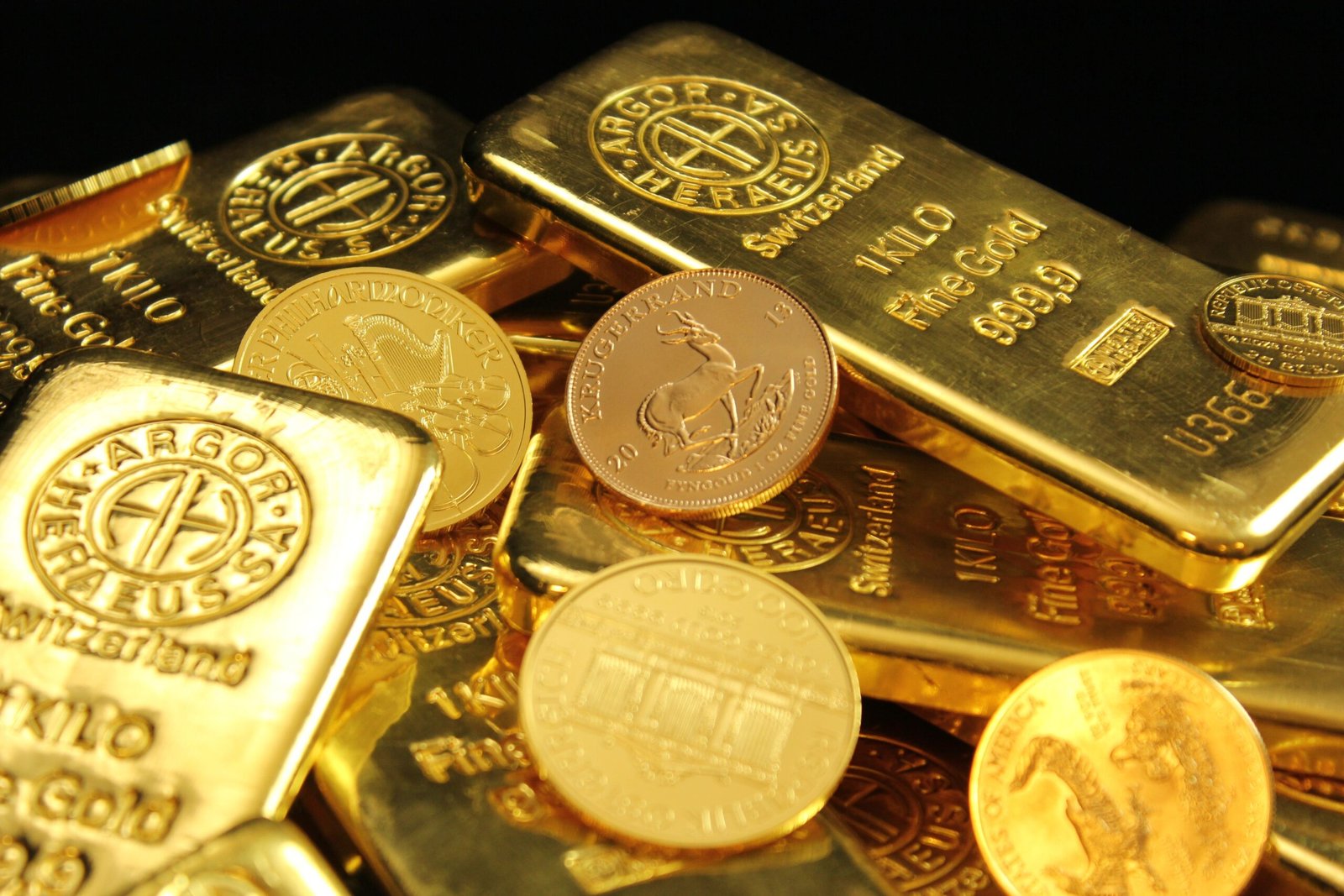
Gold prices tumbled on Wednesday, falling to their lowest level in more than a year as a stronger US dollar and expectations of further Federal Reserve interest rate increases weighed on the precious metal. The decline highlights the competing forces shaping the gold market, where monetary policy pressures are colliding with continued demand from central banks and institutional investors.
Spot gold fell more than 2% to $3,772.91 per ounce after touching $3,757, its lowest level since September 2025. US gold futures also declined as traders assessed the possibility of additional monetary tightening.
Federal Reserve officials John Williams and Alberto Musalem signaled that further interest rate increases could be necessary to control inflation. Markets were pricing in a 97.8% probability of a quarter-point rate increase in December, according to Reuters.
Higher interest rates generally weigh on gold because the metal does not generate interest income. When bond yields and returns on other interest-bearing assets rise, investors may become less willing to hold gold. A stronger US dollar can add further pressure by making bullion more expensive for buyers using other currencies.
Central Banks Maintain Strong Gold Demand
Despite the recent price decline, central bank purchases remain an important source of support for the gold market.
The World Gold Council reported that central banks and other official institutions purchased 321.2 tonnes of gold during the third quarter of 2026, a 42% increase from the same period last year. Purchases during the first nine months reached 675 tonnes, 6% higher than the corresponding period in 2025.
The increase reflects continued interest in gold as a reserve asset for diversification and risk management. Central banks have maintained purchases even as gold prices remain historically elevated, suggesting that some reserve managers are focused on longer-term strategic considerations rather than short-term price movements.
The World Gold Council expects central bank purchases for the full year to at least match 2025 levels following stronger-than-expected buying during the third quarter.
Continued accumulation could provide underlying support for gold demand, although central bank activity alone cannot prevent prices from declining when other market forces move against the metal.
Institutional Investors Return While Retail Demand Weakens
Investment demand showed a mixed picture during the third quarter, highlighting differences in how institutional and individual investors responded to gold’s price movements.
Physically backed gold exchange-traded funds recorded inflows of 211.2 tonnes during the quarter, bringing global holdings to a record 4,256 tonnes. The inflows generated approximately $31 billion in investment, according to the World Gold Council.
However, demand for physical bars and coins declined. Global bar-and-coin investment fell 19% year-over-year to 267.8 tonnes as retail buyers appeared more cautious about committing capital while gold prices lacked a clear direction.
The divergence suggests that institutional investors remained interested in gold as a portfolio asset, while some individual investors were less willing to purchase physical bullion at elevated prices.
Overall investment demand, excluding over-the-counter activity, reached 479 tonnes during the quarter, down 14% from the exceptionally strong level recorded a year earlier.
Gold’s Appeal as a Portfolio Hedge
Investors often use gold to diversify portfolios and reduce exposure to risks associated with equities, currencies and government debt. The metal can attract interest during periods of geopolitical instability, financial market stress or concerns about inflation and fiscal sustainability.
However, gold is not a guaranteed hedge against losses. Its price can fall sharply when interest rates rise, the dollar strengthens or investors liquidate assets to meet liquidity requirements.
The recent decline demonstrates that gold remains sensitive to changes in monetary policy expectations, even when longer-term demand drivers remain supportive.
For investors, the distinction between gold’s role as a diversification asset and its potential for short-term price appreciation is important. Buying bullion during periods of strong momentum can expose investors to significant losses if market conditions shift.
Competing Forces Shape Gold’s Outlook
The gold market faces opposing pressures heading into the final weeks of 2026. Higher interest rates, a stronger dollar and subdued physical investment demand could limit further gains. At the same time, central bank accumulation and institutional investment flows may help support the market.
The World Gold Council described the outlook as finely balanced, pointing to higher interest rates and mixed inflation expectations as potential headwinds, while geopolitical risks and financial market stress could encourage investors to seek gold.
Gold’s recent retreat illustrates that strong underlying demand does not eliminate volatility. The metal’s direction will likely depend on how monetary policy, currency movements and investor appetite for defensive assets evolve.
For investors, gold remains a potential portfolio diversification tool, but its performance will depend on the balance between long-term demand and the economic forces influencing financial markets.