
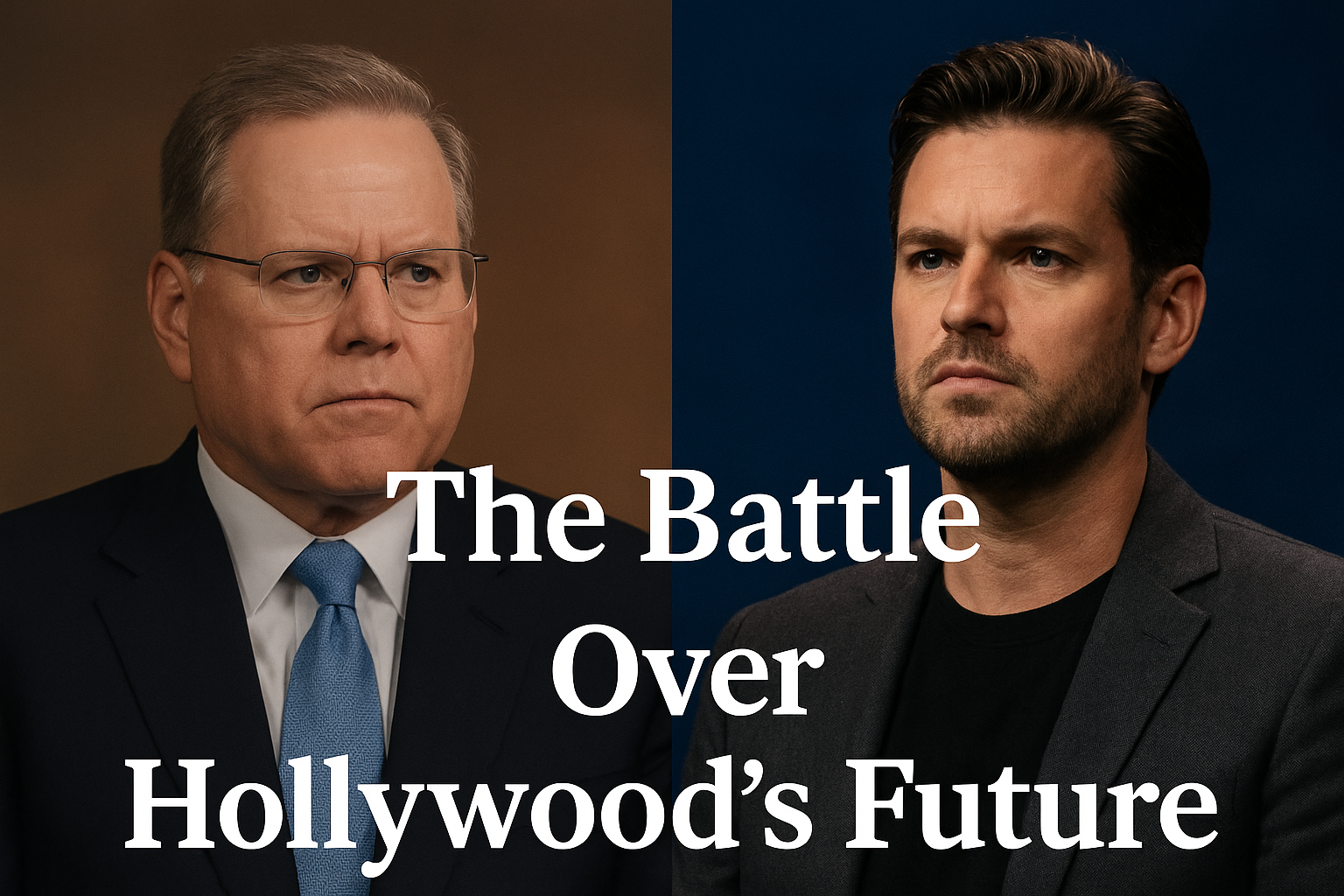
The struggle unfolding around Warner Bros.’ future is increasingly becoming a referendum on what kind of leadership will define Hollywood in the decade ahead. The headlines may focus on mergers and counteroffers, but the real story sits in the contrasting visions embodied by two executives navigating vastly different stages of their careers.
On one side is David Zaslav, who has spent years moving through the industry as if he were a fixture of its architecture — comfortable in boardrooms, fluent in investor expectations, and deeply aware of the leverage that comes from owning a century-old studio. On the other is David Ellison, part of a younger cohort that sees disruption not as a threat but as a default setting. The collision between these two approaches has turned what might have been a straightforward acquisition into something closer to a referendum on how Hollywood intends to survive a period of rapid reinvention.
What began as a competitive bidding process has morphed into a test of stamina and influence. Ellison, freshly elevated inside the newly merged Paramount Skydance structure, has been moving with the urgency of someone trying to prove the studio deserves a place among the biggest players. His efforts to outmaneuver rivals have made him a polarizing figure — admired by some for his speed and clarity, dismissed by others who believe he is pushing too hard, too soon.
Zaslav, by contrast, is operating from the standpoint of someone determined not to let legacy be equated with vulnerability. His plan to carve Warner Bros. Discovery into two separately traded companies signaled a desire to control the pace of change, even if that meant frustrating would-be buyers. Those close to him insist that patience, not hesitation, is driving his approach.
As negotiations escalated through the fall, the tempo quickened. Paramount continued to sharpen its bids, gradually raising the price and attaching leadership concessions, while Warner’s board appeared intent on slowing the process, perhaps to buy time or test the limits of each suitor’s resolve. By the time Netflix and Comcast entered the fray for the studio and HBO assets, the dynamic had shifted from whispers inside conference rooms to an unusually public tug-of-war, with both sides quietly trying to shape the narrative through allies and intermediaries.
The generational contrast between Zaslav and Ellison has added another layer to the tension. Ellison’s confidence — amplified by the financial weight of his family and the influence that comes with it — has been interpreted differently depending on who is asked. Some industry veterans view him as the natural evolution of a business that now favors agility over tradition, while others see a leader skipping intermediary steps that normally temper ambition with experience.
Zaslav, meanwhile, is confronting a different challenge: proving that long tenure does not automatically place one on the defensive. For him, the contest is as much about preserving strategic autonomy as it is about price. Every delay, every methodical step in the process signals a belief that Warner Bros. still holds leverage — not as a relic, but as a premium asset in a shrinking field of global entertainment brands.
The involvement of political and financial power has only complicated things further. Larry Ellison’s backing gives Paramount not just money but access, which some board members and advisers interpret as a subtle advantage in any regulatory review. Yet that same perception has raised eyebrows inside certain circles, a reminder that government proximity can be an asset or a liability depending on who is watching.
By late October, the standoff had become a matter of timing as much as valuation. Paramount insisted it was responding quickly and transparently; Warner’s leadership insisted it was being prudent. The competing interpretations reflected a deeper truth about the entertainment landscape: companies are not only negotiating transactions — they are negotiating identities in an era when consistency, scale, and brand recognition have become existential requirements.
Even social settings became symbolic. When the two executives appeared at the same event at the end of October, their physical proximity and apparent disinterest in interacting did more to illustrate the standoff than any press statement could. The moment captured the essence of the dispute: two leaders occupying the same space, yet operating on entirely different timelines and philosophies.
As the next phase unfolds, the merger itself may become secondary. What Hollywood is really watching is which worldview will prevail — the entrenched steadiness of a veteran executive managing a legacy empire, or the urgency of a rising figure convinced that survival now depends on speed, scale, and reinvention. The outcome will shape not only who controls Warner Bros., but also what kind of leadership the industry believes can navigate its most unpredictable era.