
By Guy Bennett
Vancouver, BC, August 4, 2026 – For the last decade my Chinese wife has encouraged me to participate in “age appropriate” forms of exercise, like ping pong. Here in Vancouver, BC, Canada my primary passion is soccer.
Last winter, after rolling my right ankle and straining a calf muscle, I hurt both my knees. These injuries were largely self-inflicted: I’m 66-years-old. I play on the artificial turf at Jericho Beach, which is basically concrete coated with green peach fuzz.
After three months of physiotherapy, I was still limping. My Canadian family doctor told me that to get a referral to a knee specialist, I would first need an MRI. Our universal healthcare system means that services are delivered on the basis of need. The wait for non-urgent MRIs in Vancouver can be up to a year.
This spring I flew to Yi Chang, China to visit my in-laws. Over dinner, my wife mentioned, “You could get an MRI here in Yi Chang tomorrow for 500 Yuan per knee.” That’s one hundred Canadian dollars [CAD$100]. China doesn’t have a medical tourism industry. You need to speak Mandarin (which I do, clumsily) or have a personal translator in order to have any chance of negotiating the system.
At 9:00 the next morning, we took a Didi (Chinese Uber) to the Three Gorges Central People’s Hospital. Built in 1949, the stately complex features one tall white tower, and two shorter towers.
As we entered the main lobby, my heart sank. There was an imposing row of cubicles with uniformed employees perched on stools behind plexiglass. About fifteen people waited in front of each station. It reminded me of betting windows at a racetrack.
The lines moved quickly. Intake took less than three minutes. Within half an hour, we met a knee specialist. There was a 50-minute wait to get the MRI. The technician gave us a card with a QR-code which we scanned at a kiosk that looked like an ATM machine. We paid CAD$2. It spat out four 12” X 12” sheets of film. These were the MRI results. I was impressed.
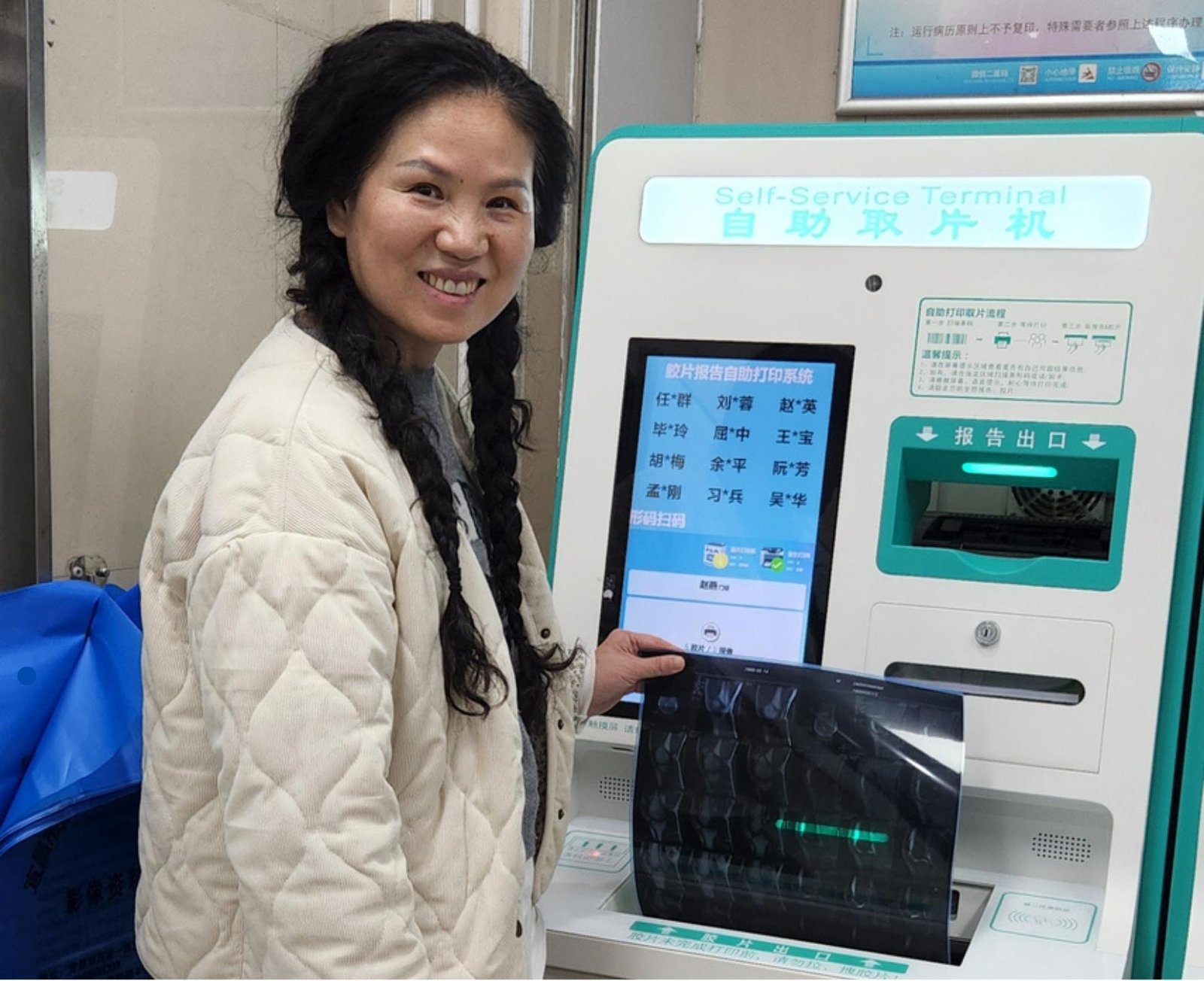
Above: Mrs. Guo Wen Bennett getting MRI film
On the taxi trip home, my wife asked, “Do you want to get surgery in China?”
Through soccer, I belong to a multi-ethnic community of men, ranging in age from 35-70. After the games at Jericho Turf, we drink beer, laugh, argue and share food. One freakishly fast 50-year-old striker sometimes lugs a portable wood-fired oven to the side of the field. He serves slices of thin-crust pizza on brown paper napkins. It’s a good place to be, yapping in the rain with a bunch of noisy aging athletes.
With a jolt, I realised these friendships – these connections to other cultures, other lives – could not be duplicated or replaced.
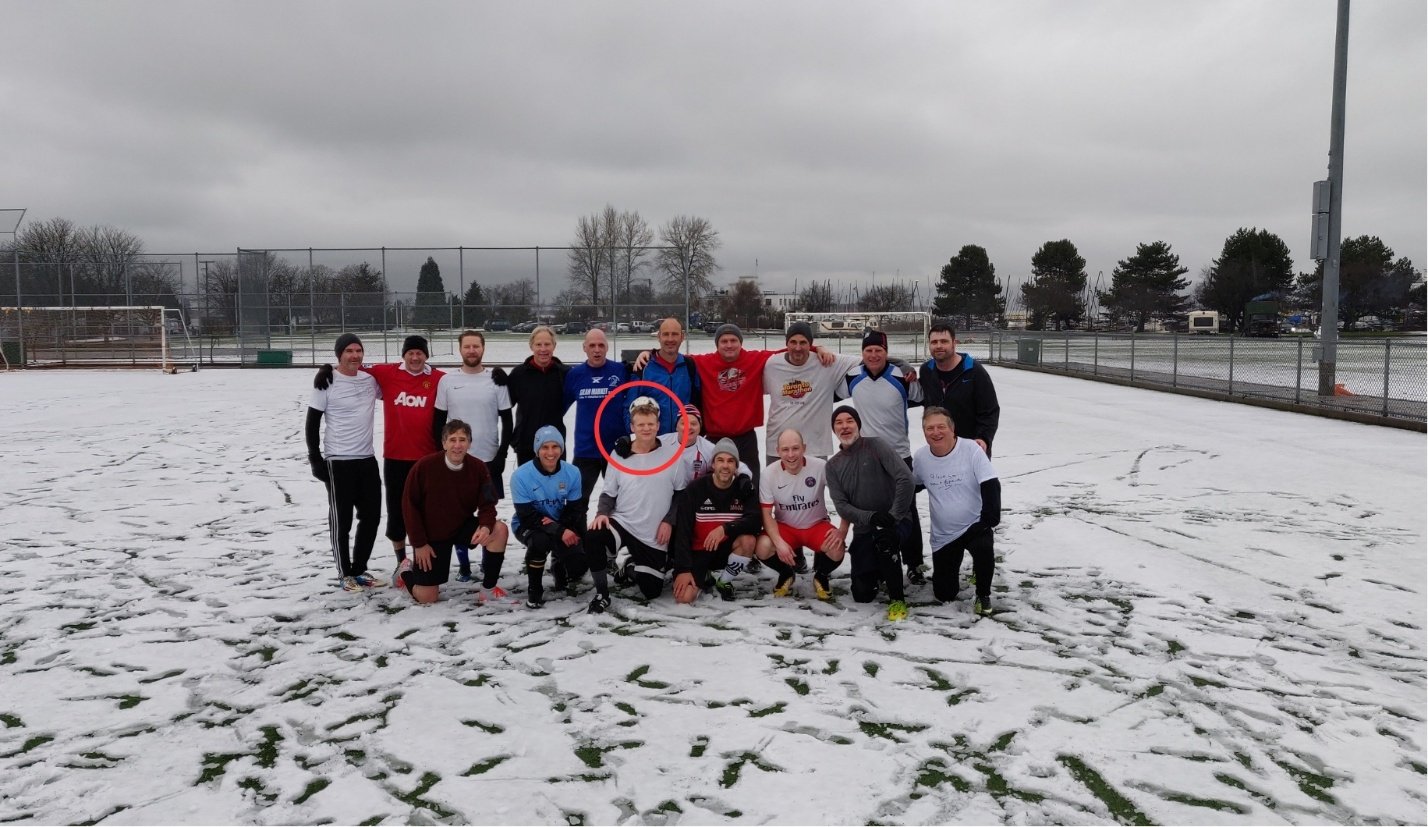
Above: Jericho Beach Soccer Group circa 2024
The next day, we met Dr. Wu Huang on the 4th floor of the Second People’s Hospital. A handsome, 42-year-old surgeon with a skeptical, intelligent face – he examined the MRI film before confirming that I would benefit from a partial meniscectomy on both knees. In this minimally invasive procedure, the surgeon makes a tiny incision in the knee, then inserts slender cutting tools and a micro-camera to “clean-up” the torn meniscus.
The total cost would be CAD$3,500. I asked about scheduling. He consulted his computer. “I have an opening on Tuesday.” I told him, “I’m in.”
Dr Wu suppressed a smile. “Chinese people are often fearful of surgery. The Confucian view is that our bodies are received from our parents. To damage the skin or remove organs is disrespectful. Westerners believe that the body is a machine which requires repairs and replacement parts. It’s a different way of thinking.”
I shared my hospital room with two roommates: an elderly woman who had difficulty walking, and a middle-aged man with bandaged hands and feet. There was a washroom, with a traditional hole-in-the-floor Chinese toilet. A wooden commode was pushed against the wall.
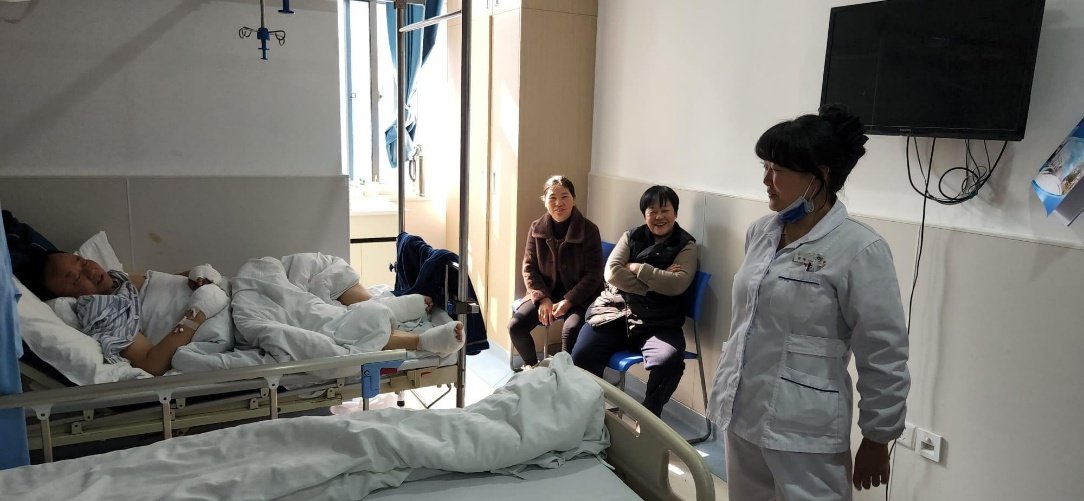
Above: Staff, patients and family in the Yi Chang Second People’s Hospital
In Chinese hospitals, family members, or privately employed caregivers, do much of the primary nursing (personal hygiene, dressing, repositioning the patient). The hospital does not serve meals. Food is ordered through cellphone apps. An army of motorcycle couriers invade the wards, carrying yellow bags of soup, dumplings, fruit and rice dishes. A weary woman used chopsticks to feed the man with bandaged hands.
The next morning, Dr. Wu performed surgery on both my knees. Two hours later, I was able to walk with crutches. In Canada, a partial meniscectomy is an outpatient procedure. Dr. Wu insisted on keeping me in hospital for five days, to monitor “pain levels, mobility and psychological health.”
When I asked Dr. Wu when I could return to playing soccer, he winced and spoke carefully. “You are 66 years old. There is not a lot of cartilage left in your knees. It is important that you choose the correct physical activity for someone your age.”
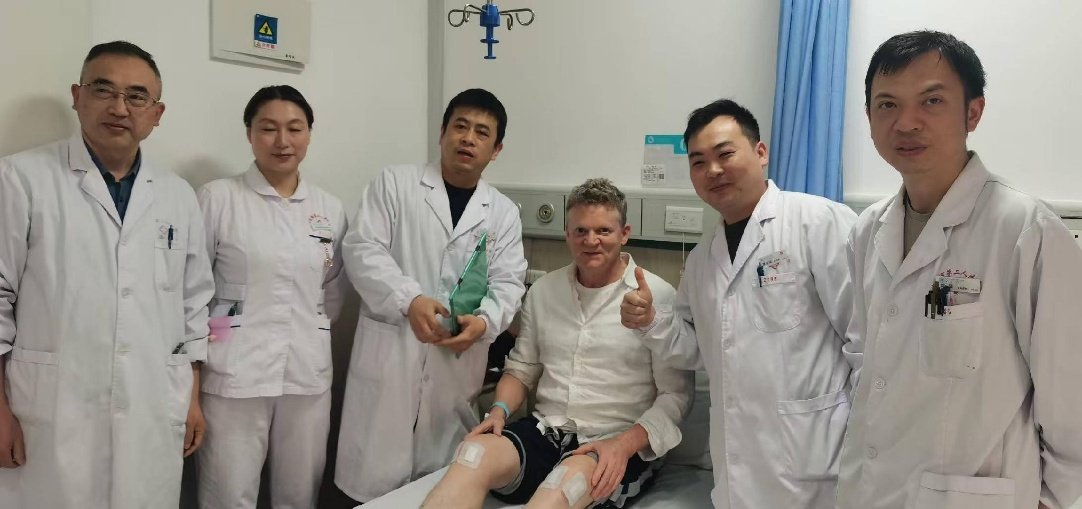
Above: Guy Bennett with Dr. Wu and his medical team
Back in Vancouver, I started dribbling a soccer ball around the perimeter of a local grass field.
The words communism and communal are derived from the Latin word communis, which means “shared by all”. From what I have observed, the concept and practice of communal living is alive and well in China.
This emphasis on community explains why a surgeon would hand out his cell phone number to his patients. It explains why MRI film can be purchased at a kiosk for CAD$2. It explains why, during my recovery period, five of our Yi Chang neighbours dug up vegetables from their gardens and delivered them to our door. It explains why China has produced enough medical specialists to expediently service 1.4 billion people. And it explains why, without complaint, a young woman in a business suit would clean her mother-in-law’s bed pan.
It does not explain a deeper mystery: why – despite stern warnings from my Chinese wife and from Dr. Wu – I cannot seem to accept that my body is broken and I am too old to play soccer.
This article was edited by Sara Bennett Fox. Guy Bennett’s bio is here.